Ohio Property Records
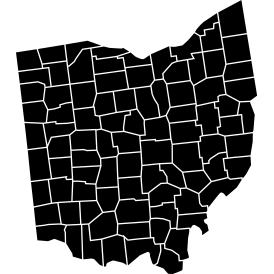
Ohio maintains an extensive system of recorded property instruments through local recording offices operating in all 88 counties.
These repositories serve as the official archive of real property files, documenting ownership, conveyances, encumbrances, and assessments associated with each parcel. The system supports more than 5.3 million housing units statewide, encompassing both residential and commercial properties.
As public property documents, these records establish a verifiable chain of title, allowing you to trace transactions, confirm tax obligations, or examine development activity affecting a given tract of land. They cover deeds, mortgages, liens, plats, and related filings submitted for recordation.
By accessing Ohio’s land records, you can examine the legal and financial footprint of real estate assets, monitor property transfers, and understand how local jurisdictions manage the recording and indexing of documents for public reference.
Overview of Property Records
The system of real estate records in Ohio traces its roots to the survey and settlement of the region following the formation of the Northwest Territory. Early documents include federal land surveys and private land grants, from which formal township and range systems emerged.
One key milestone: the initial public-land survey in the eastern part of Ohio (also known as the Seven Ranges) dates back to the mid-1780s, establishing a grid that underlies many modern parcels. Over time, as settlement intensified and counties were formalized, the recording of public property documents became standard for tracking land ownership and transfers.
In Ohio, the prevailing framework is a deed-recording model. Each county has a local recorder responsible for maintaining land records, though the exact offices and titles vary across counties. While there is consistency in structure, you’ll find variation in how index and imaging systems are set up.
In recent decades, many counties have digitized at least portions of their archives for recorded property instruments. Some offices link parcel identifiers to GIS maps or allow remote access to scanned documents.
What Counts as Property Records in Ohio
Every parcel in Ohio generates a range of recorded property instruments that document its legal, financial, and physical characteristics. Together, these materials create a permanent record of ownership and land use, which includes:
Deeds & Title Records
Deeds and title records are the fundamental set of documents that establish ownership transfers from one party to another. In Ohio, you will find deeds filed in each county and indexed by county recorder offices dating to the 1780s onwards. For example, in Warren County, all deeds are available and indexed online back to 1797.
Ownership History & Transfers
Ownership history and transfer records capture the sequence of property sales, conveyances, and changes in ownership over time. These records help establish a clear chain of title, showing how ownership has passed from one party to another. In Ohio, such documentation provides valuable reference for legal, financial, and historical research related to land and property.
Mortgage & Loan Documents
Mortgage and loan documents record the creation of debt secured by real property, such as a deed of trust or mortgage note that finances a purchase, refinance, or secured improvement of land or real estate. The amount of the mortgage is generally influenced by the property’s market value, local housing trends, and prevailing lending conditions.
Property Tax Records & Assessments
Property tax records and assessment documents capture how real-estate parcels are valued for tax purposes, the millage rates applied, exemptions claimed, and the annual tax liabilities imposed on owners. A mill represents a tax rate of $1 for every $1,000 of a property's assessed value, which in Ohio equals 35% of its appraised value.
Property Values & Market Data
The collection of property values & market data encompasses information on typical transaction prices, median values, appreciation trends, and the changing financial profile of real estate in the state. Based on recent data, the median home value in Ohio is about $240,000.
Building Permits & Zoning Records
Building permits and zoning records document authorization for new construction, major renovations, demolitions, and land-use changes on parcels. Zoning records accompany these permits by establishing permitted uses, setbacks, density limits, and overlay districts.
Liens, Foreclosures & Judgments
Liens, foreclosure filings, and judgments are legal instruments that attach to or affect real property. They cover obligations such as unpaid taxes, mortgage defaults, mechanics’ liens, or court-ordered judgments. Currently, Ohio has more than 1,300 housing units for foreclosure.
Parcel Maps & Land Surveys
Parcel maps and land surveys consist of the spatial and legal‐boundary records that define each tract or lot of real property. These maps display parcel lines, dimensions, lot numbers, easements, right-of-ways, and other features associated with ownership and use.
Ohio Property Law
While county offices handle much of the day-to-day recording activity, the broader principles stem from state-level legal standards that maintain consistency in how land interests are conveyed, registered, or encumbered across Ohio.
Key Statutory Framework
Ohio’s property laws are codified under the Ohio Revised Code (ORC). Below is an organized summary of major code sections that form the legal foundation of the state’s recorded property instruments system:
Title 53 Conveyances and Encumbrances: Governs the execution, acknowledgment, and delivery of deeds, mortgages, and leases
Title 5 Township Zoning: Grants zoning powers to townships for regulating land use and development
Title 3 Counties: Governs the powers and operations of counties, including authority over zoning, land-use regulation
§ 149.43 Public Records Law: Defines what constitutes a public record and establishes public access rights to recorded property files.
Deeds and Transfers
In Ohio, the execution and recording of deeds are governed primarily by Chapters 5301 and 5302 of the Ohio Revised Code. These provisions define how real property interests are conveyed, acknowledged, and accepted for recording.
A valid deed must identify the grantor and grantee, include a legal description of the property, and bear the required signatures and acknowledgments.
Ohio recognizes several standard deed types, including general warranty, limited warranty, quitclaim, and fiduciary deeds, each providing different levels of protection and obligations between parties. Once properly executed, the deed is filed with the county recorder under §5301.25, establishing public notice of the transfer and priority against subsequent claims.
Under §5301.07, recording also raises presumptions of delivery and acceptance, meaning that a properly recorded instrument is treated as having been legally transferred.
Mortgages and Liens
Ohio’s legal framework for mortgages and liens is established under Chapter 5305 of the Ohio Revised Code. These provisions govern the process of pledging real property as security for a loan and the manner in which creditors may assert claims through recorded liens.
A mortgage must be in writing, signed by the mortgagor, properly acknowledged, and recorded in the county where the property is located. Recording provides constructive notice to third parties and establishes the mortgage’s priority among competing claims.
Once the debt is repaid, a release or satisfaction must also be recorded to clear the lien from the property’s title.
Easements
Easements in Ohio are governed by § 5301.53. These statutes define how rights-of-way or limited property interests are created, recorded, and maintained.
An easement grants one party the right to use another’s land for a specific purpose, such as access, utilities, or drainage, without transferring ownership.
Easements may be created by express written agreement, implication, necessity, or long-term use (prescription). When granted in writing, the document must be executed and recorded in the same manner as a deed to provide public notice and establish priority.
Under the Marketable Title Act (§§ 5301.47–5301.56), older easements may be extinguished if not re-recorded or specifically referenced within a defined statutory period. This rule promotes clarity in the land records by limiting outdated or dormant claims. Recorded easements form part of Ohio’s land records, outlining the property’s use limitations and shared access rights.
Zoning and Land Use
Zoning and land use regulations in Ohio are primarily outlined in Chapters 303 and 519. These chapters delegate planning and zoning authority to counties, townships, and municipalities, respectively.
Under Chapter 303, counties may adopt rural zoning resolutions that regulate land use in unincorporated areas, addressing issues such as building placement, lot size, and permitted uses.
Chapter 519 grants similar powers to townships, enabling them to guide the development of residential, commercial, agricultural, and industrial areas within township boundaries.
These zoning frameworks are reinforced by recorded land use maps, plats, and variances, which become part of the public record.
Public Records
The accessibility and preservation of Ohio’s real estate records are governed by § 149.43, commonly referred to as the Public Records Law.
This statute defines what constitutes a public record and establishes the right of any person to inspect or obtain copies of documents maintained by public offices, including those that relate to property ownership and transactions.
Under this framework, recorded property instruments are considered public records once filed and accepted by the appropriate local office. While access is broad, certain exemptions apply to protect confidential or sensitive information.
The Role of Government Agencies
In Ohio, the maintenance and administration of real property records are carried out primarily at the county level. Each county operates a recorder’s office, which serves as the official custodian of recorded property instruments.
These offices are responsible for indexing, archiving, and providing public access to the documents that establish ownership and encumbrance history.
Alongside recorders, the county auditor’s office maintains related property ownership records and assessment data used for taxation purposes, while county engineers manage parcel maps and land survey files that define property boundaries.
Ohio also authorizes limited title registration through the Torrens System and is administered by the county recorder in coordination with the Court of Common Pleas. This registered land process creates a state-certified title distinct from traditional deed recording.
Municipal offices generally do not record deeds or titles but may hold zoning, building permit, and land-use records that complement county archives.
How to Access Property Records
You can access recorded property documents in Ohio through several methods, depending on the county and the type of record you need. Most services are managed at the county level, though some counties now offer partial online access to their databases.
Online: Many Ohio counties maintain searchable web portals for deeds, mortgages, and liens. Examples include Franklin County Recorder’s Public Records Search, Cuyahoga County Recorder’s Online Search, and Hamilton County Recorder’s Document Search.
In Person: You may visit the County Recorder’s Office where the property is located. Offices are typically situated at the county courthouse or administration building.
By Mail: Some recorders accept document requests by mail with completed forms and applicable fees. Contact the county office directly for specific mailing instructions.
By Phone: County offices often assist by confirming record availability, explaining search procedures, or verifying acceptable payment methods.
Limitations of Accessing Property Records
While Ohio provides broad access to public property documents, there are several practical limitations you may encounter when retrieving information.
Because Ohio’s land records system is decentralized, each of the 88 counties maintains its own database, indexing structure, and document imaging standards. This means search tools, document formats, and date ranges of available records can vary widely from one county to another.
Fees also differ by location. Some counties charge per-page download or certified copy fees, while others allow limited free online viewing. In some rural areas, older recorded property instruments may not yet be digitized, requiring in-person visits to review physical ledgers or microfilm archives.
Another limitation involves knowing what to search for and where. Deeds, mortgages, and liens are usually held by the county recorder, while tax and assessment data come from the Auditor’s Office, and zoning records from local planning departments.
How Property Records Are Updated
Different categories of property-related records in Ohio are updated at varying frequencies depending on the trigger event and the responsible office. Here’s a breakdown of how often records are typically updated and what events prompt those updates:
When a Sale or Transfer Occurs: Once the deed or conveyance document meets recording standards and is presented, many counties register it the same day or within a few days when submitted electronically.
When a New Mortgage or Lien Is Filed: After submission and proper format, recording offices process and index these documents, often within 1–14 days, depending on method and backlog.
When Building Permits Are Issued: Permit-issuing agencies (municipal or county) update zoning or land-use files regularly, typically immediately upon approval of the permit and entry into the database.
When Assessors Update Property Valuations for Tax Purposes: County auditors complete a full appraisal of all properties once every six years, with a required update in the third year of the cycle (a “triennial update”).
When Court Judgments or Foreclosures Impact Ownership: Judgment filings or foreclosure certifications are entered into the recorder’s or clerk’s index as soon as they are accepted for recording, which then alters the property’s encumbrance and ownership history.
The Importance of Property Records
Property records form establish a clear chain of title, provide transparency in transactions, and help protect property rights across multiple sectors. Beyond ownership verification, these documents support taxation, lending, and land development functions that keep both local and national real estate systems operating efficiently.
Homeowners rely on property records to verify ownership, confirm boundary descriptions, and identify liens or encumbrances that may affect property rights.
Buyers and investors use recorded property instruments to review a property’s history before purchase.
Lenders and financial institutions depend on these documents to establish and secure their interests in real property.
Surveyors, appraisers, and planners reference land records and parcel maps to verify boundaries, determine market value, and plan developments consistent with zoning and land-use rules.
Local governments maintain and use property ownership records to manage taxation, zoning enforcement, and community planning.
What Information Do Ohio Property Records Contain?
Ohio’s recorded property instruments contain a comprehensive set of details that document a property’s ownership, financial history, and legal characteristics. These records typically include:
Ownership Information: Names of current and prior owners, transfer dates, and the nature of each transaction (e.g., sale, gift, or inheritance)
Legal Descriptions: Precise boundary definitions, lot numbers, subdivision names, and references to plats or surveys are used to identify the property’s physical extent
Deed and Title Details: Instrument numbers, deed types (such as warranty or quitclaim), recording dates, and acknowledgment certifications verifying authenticity
Encumbrances and Liens: Active mortgages, tax liens, mechanics’ liens, and other recorded claims that may restrict or affect the property’s transferability
Assessed and Market Values: Appraised values, assessment ratios, and taxable values are maintained by county auditors for property tax computation
Tax and Payment History: Details on property tax charges, delinquencies, exemptions, and payments made to local taxing authorities
Zoning and Land Use Indicators: Zoning classifications, permitted uses, setbacks, and restrictions that determine how the property may be developed or modified
Survey and Mapping Data: Parcel numbers, GIS coordinates, and references to official plats or recorded surveys used to verify boundaries and lot dimensions
Building and Permit Information: Construction permits, occupancy certificates, and renovation approvals tied to property improvements
Court or Foreclosure Actions: Recorded judgments, foreclosure entries, or sheriff’s deeds that alter ownership or impose legal constraints
Resolving Property Disputes
Resolving property disputes in Ohio typically involves negotiation, mediation, or legal action, depending on the nature of the conflict. Common disputes include boundary disagreements, title defects, easement issues, landlord-tenant conflicts, and ownership claims.
Property owners often start by reviewing deeds, surveys, and title records to clarify rights and boundaries. If informal resolution fails, parties may seek mediation or file a lawsuit in the Ohio Courts of Common Pleas, which has jurisdiction over real estate matters. The court may order a property survey, a quiet title action, or a partition if ownership is shared.
In some cases, title insurance can help resolve claims related to liens or ownership defects. Consulting a real estate attorney is advisable to ensure compliance with Ohio property laws and to protect ownership rights throughout the dispute process. Early legal guidance often helps prevent costly litigation and encourages fair settlements.
FAQs
Some Ohio counties offer free property alert systems that notify you if a document is recorded against your name or parcel. You can sign up through the county recorder’s website. These tools help track potential title activity or unauthorized filings without incurring the costs of third-party monitoring services.
You can verify ownership by searching the County Recorder's Office or the Auditor's property search portal in the county where the parcel is located. Deed and tax assessment records display the current owner's name, parcel ID, and legal description.
Sale prices are often listed in property transfer records or in the Real Estate Transfer Tax Declarations maintained by county auditors. Some online property search tools also include sale amount and date information for public reference.
You can estimate property value by checking your county auditor’s assessed value, reviewing recent comparable sales in your area, or using real estate listing sites for general estimates. For a formal valuation, a licensed appraiser provides the most reliable report.
The original sale price is recorded in your deed or transfer statement filed at the county recorder’s office. Older property records may be available in archived ledgers or microfilm collections for historical transactions.
You can locate abandoned or tax-delinquent properties through county auditor or land bank websites, which list vacant or forfeited parcels. Avoid entering such properties without authorization, as ownership and liability may still apply.
Living in or taking possession of an abandoned property without the owner’s consent is considered trespassing. Legal ownership or occupancy requires a recorded deed, lease, or approved transfer of title through lawful channels.
If the deceased spouse was the sole borrower, the surviving partner is generally not automatically responsible for the mortgage unless their name is also on the loan or deed. However, the lender still holds a lien against the property. The surviving spouse may need to assume the loan to keep ownership. Legal and financial advice should be sought promptly.